How to Use Your Phone When Traveling to China (2026 Guide)
Key Takeaways: How to Use Your Phone in China
If you’re traveling to China, having a properly set up phone is essential for navigation, payments, communication, and daily activities. Unlike other countries, China’s mobile ecosystem requires some preparation due to network restrictions, app limitations, and SIM requirements.
- Best overall option: A local Chinese SIM card offers the most affordable rates, fastest speeds, and full compatibility with local apps.
- Most convenient option: International roaming lets you keep your home number and access apps like Google and WhatsApp without restrictions.
- Best for short trips: A travel SIM or eSIM provides a quick, flexible setup before arrival.
- Best for groups: A portable WiFi device allows multiple devices to stay connected without changing SIM cards.
What You Need to Know Before You Go
- Apps like Google, Facebook, and WhatsApp are blocked on local Chinese networks—install a VPN before arrival
- Mobile payments (WeChat Pay & Alipay) are widely used, with limited reliance on cash or credit cards
- SMS verification is required for many services, so having a working number matters
- Network compatibility and data costs vary depending on your chosen solution
Bottom Line
The best way to use your phone in China depends on your travel duration, budget, and need for global app access. With the right setup, you can stay connected, make payments, and travel smoothly—turning your smartphone into an essential tool for navigating China with ease.
Planning a trip to China? After sorting out your visa and flights, there’s one critical question left: how will you use your phone in China?
Unlike many other countries, mobile connectivity in China works differently. From internet restrictions to mobile payments and local apps, having a properly set up phone is not just helpful—it’s essential.
This guide breaks down the best ways to use your phone in China, so you can stay connected, navigate easily, and avoid common travel headaches.
Why Your Phone Is Essential in China
In China, your smartphone is more than just a communication device—it’s your wallet, travel guide, and daily life tool.
Without a working phone, you may struggle with:
- Transportation: Ride-hailing apps and maps require internet access
- Payments: Most places use WeChat Pay or Alipay, with limited cash acceptance
- Verification codes: Many services require SMS authentication
- Communication: Bookings, deliveries, and updates rely on mobile notifications
👉 Simply put, you cannot travel smoothly in China without mobile connectivity.
4 Best Ways to Use Your Phone in China
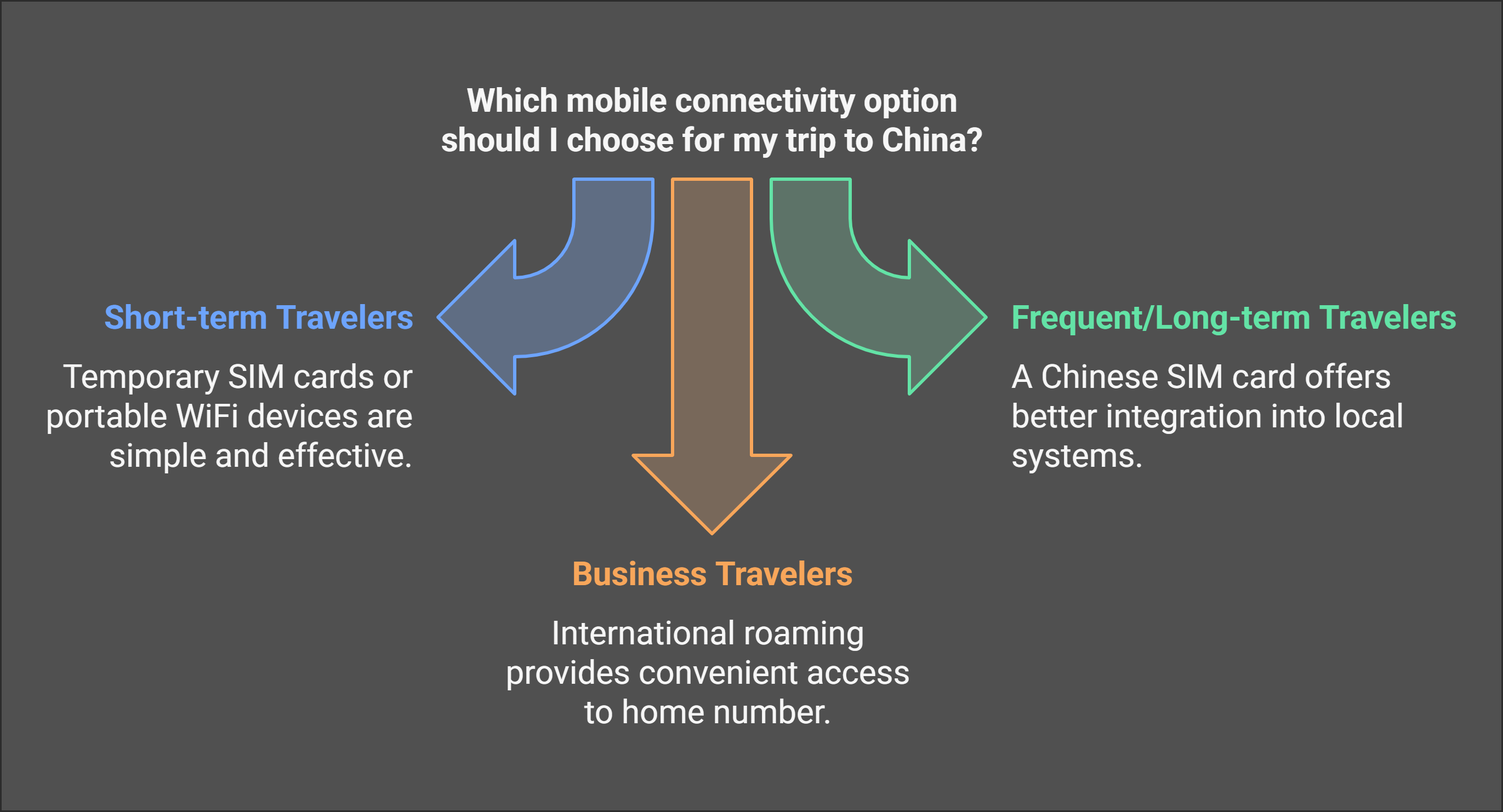
1. Buy a Local Chinese SIM Card (Best for Value)
Getting a China SIM card is one of the most reliable and cost-effective options.
How it works:
- Visit stores like China Mobile, China Unicom, or China Telecom
- Bring your passport and visa
- Choose a plan with data, calls, and SMS
- Set up APN settings with staff assistance
Pros:
- Affordable data plans
- Fast 4G/5G speeds
- Works seamlessly with local apps
Cons:
- Registration can be difficult due to language barriers
- You’ll get a new Chinese phone number
- Apps like Google, Facebook, and WhatsApp are blocked without a VPN
👉 Best for: Long-term travelers or frequent visitors

2. Use International Roaming (Best for Convenience)
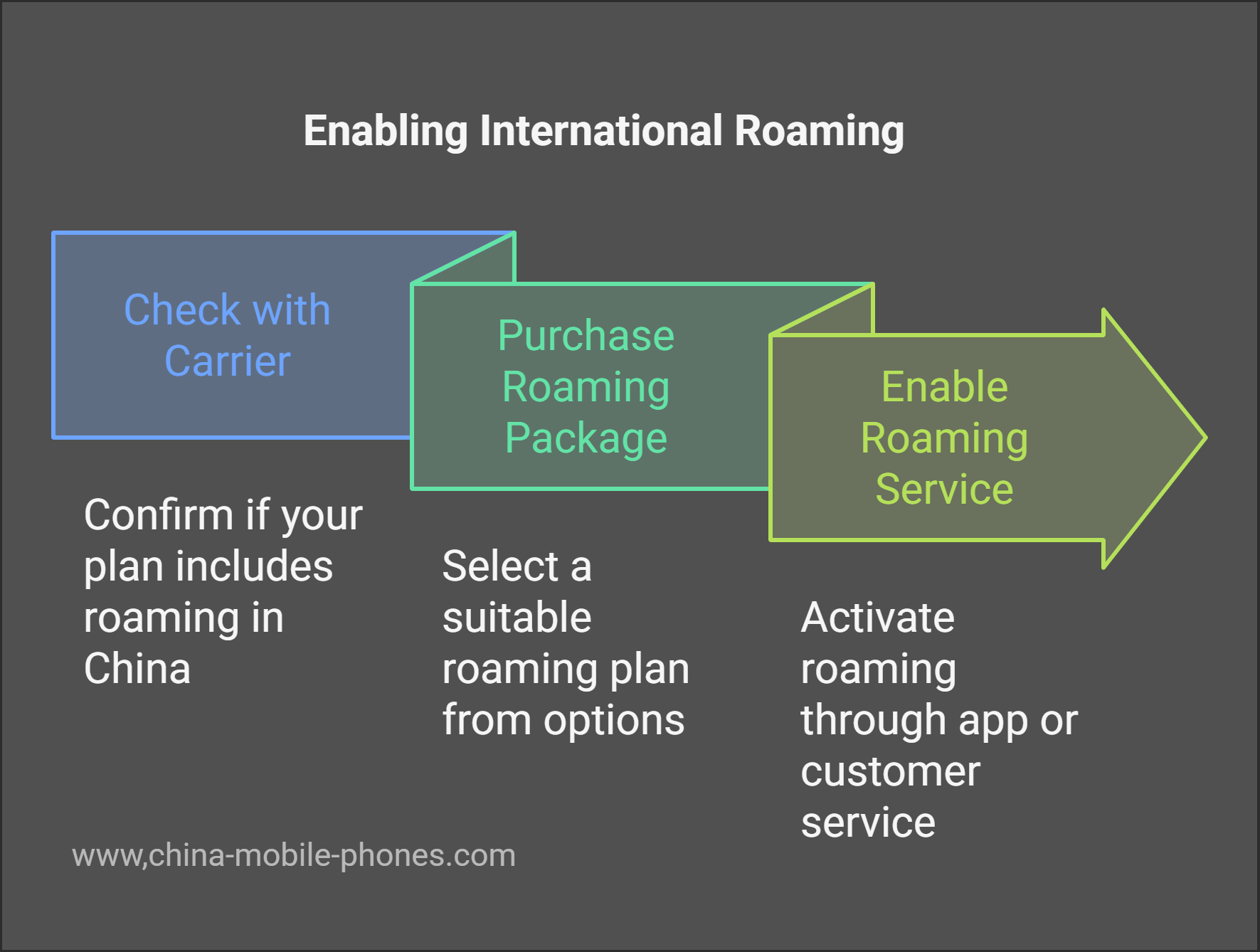
If you want to keep your existing number, international roaming in China is the easiest option.
How it works:
- Contact your carrier (e.g., Vodafone, AT&T, T-Mobile)
- Activate a roaming plan before departure
- Use your phone as usual
Pros:
- No SIM swapping
- Keep your home number
- Access global apps (Google, WhatsApp, etc.)
Cons:
- Expensive for heavy data users
- Some plans have slow speeds (e.g., 2G limits)
👉 Best for: Business travelers or short trips needing constant access
3. Buy a Travel SIM or eSIM (Best for Flexibility)
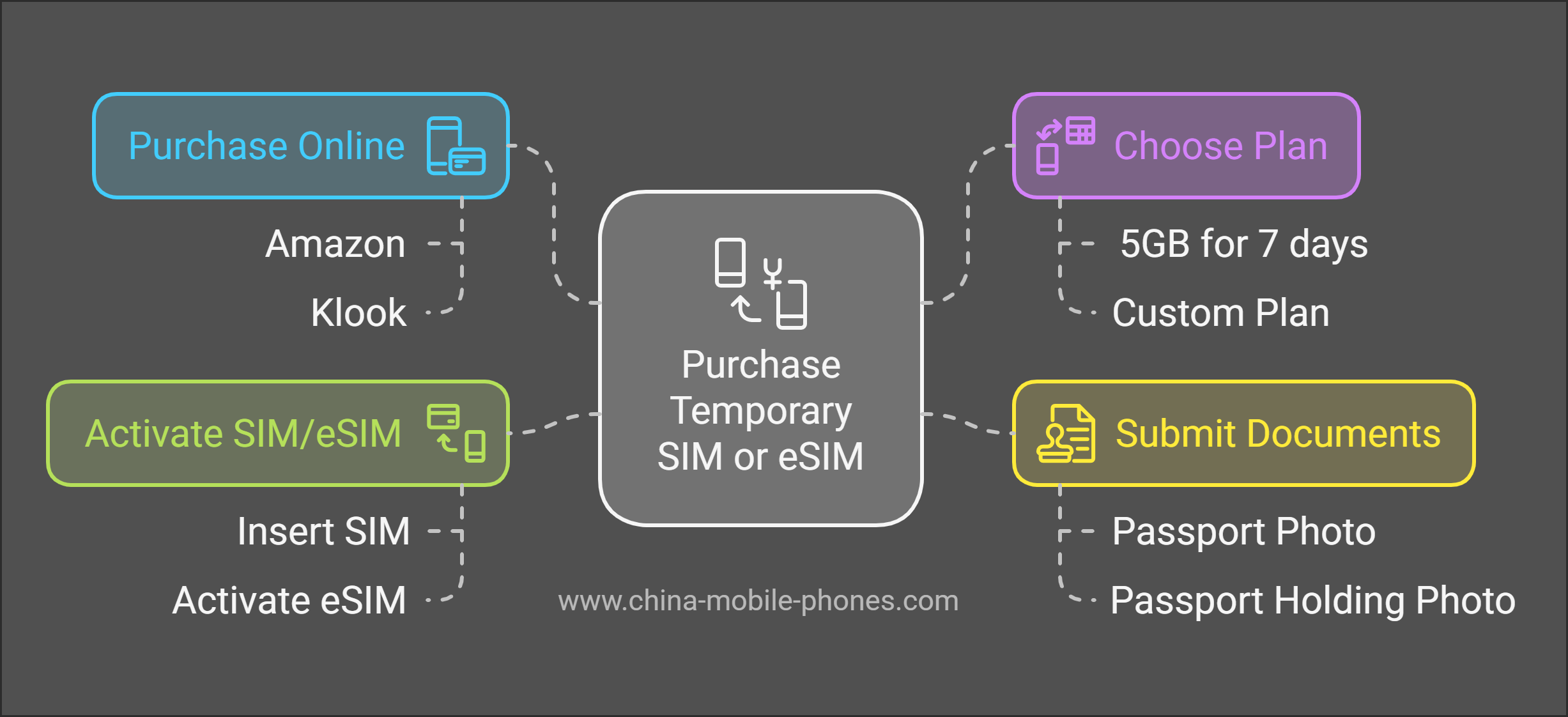
A China travel SIM or eSIM is a popular choice for tourists.
How it works:
- Buy online (Amazon, Klook, etc.)
- Choose data based on trip length
- Insert SIM or activate eSIM on arrival
Pros:
- Ready to use upon arrival
- No contracts
- Ideal for short stays
Cons:
- More expensive than local SIM cards
- Setup may require ID verification
👉 Best for: Short-term travelers (1–2 weeks)
4. Rent a Mobile WiFi Device
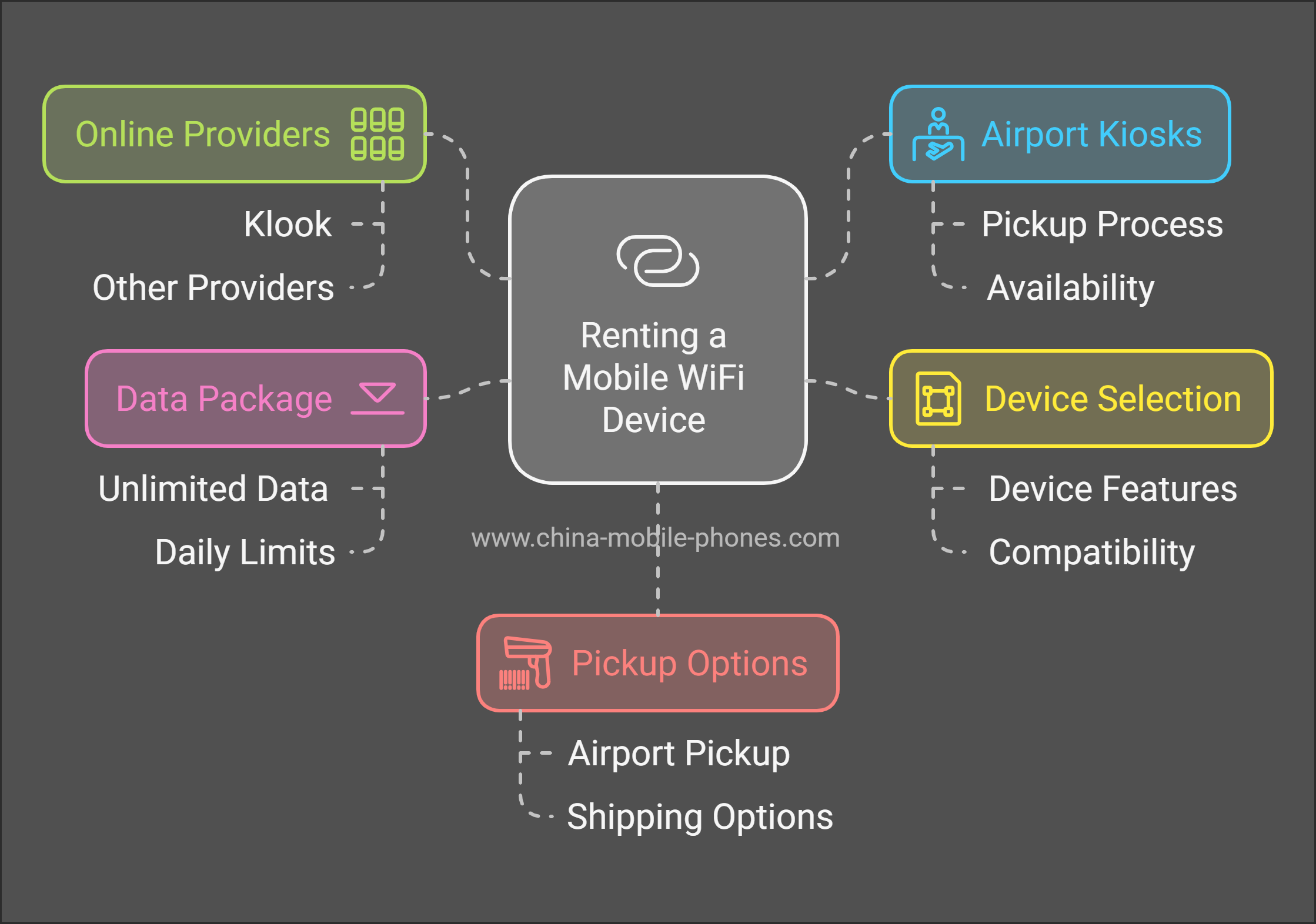
A portable WiFi hotspot lets you stay connected without changing your SIM.
How it works:
- Rent online or at the airport
- Connect multiple devices via WiFi
Pros:
- Share internet with friends or family
- No changes to your phone setup
Cons:
- Must carry and charge an extra device
- No local number for calls or SMS
- Costs add up over time
👉 Best for: Families or group travelers
Which Option Should You Choose?
- Short trips (1–2 weeks): Travel SIM or pocket WiFi
- Long stays or frequent travel: Local Chinese SIM card
- Business or convenience: International roaming
Choosing the right option depends on your budget, trip length, and need for apps or phone numbers.
Important Tips for Using Your Phone in China
1. Set Up Payment Apps Early
Install and verify WeChat Pay and Alipay before arrival. Many places in China are cashless.
2. Download a VPN Before You Go
Apps like Google, YouTube, Facebook, and WhatsApp are blocked in China. 👉 Install a VPN before entering China, as downloads may be restricted inside the country.
3. Check Network Compatibility
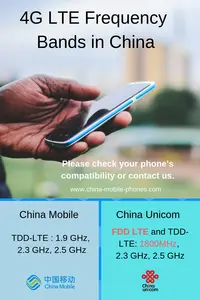
Ensure your phone supports China’s 4G/5G bands for stable connectivity.
4. Monitor Your Data Usage
Roaming and rental plans can become expensive quickly—track your usage to avoid surprises.
Final Thoughts
Using your phone in China doesn’t have to be complicated—but it does require planning.
Whether you choose a local SIM card for value, roaming for convenience, or a travel eSIM for flexibility, the key is to stay connected so you can navigate, pay, and communicate with ease.
👉 With the right setup, your phone becomes your most powerful travel tool in China—helping you explore the country confidently and stress-free.
How to Use Your Phone in China Q & A
Can I use my phone normally in China?
Can I use my phone normally in China?
Yes, but with limitations. While your phone will work, many apps like Google, WhatsApp, and Facebook are blocked on local networks, so preparation is required.
What is the best way to use a phone in China for tourists?
What is the best way to use a phone in China for tourists?
The best option depends on your needs:
- Local SIM: Best value and speed
- Roaming: Most convenient
- eSIM: Best for short trips
Do I need a SIM card to use my phone in China?
Do I need a SIM card to use my phone in China?
Not necessarily. You can use international roaming or pocket WiFi, but a local SIM card offers better value and performance.
Will my SIM card work in China?
Will my SIM card work in China?
Yes, if your carrier supports international roaming in China. However, charges may be high depending on your plan.
Can I access Google, WhatsApp, and Facebook in China?
Can I access Google, WhatsApp, and Facebook in China?
Not on local Chinese networks. These apps are blocked, so you’ll need a VPN installed before arrival to access them.
Is eSIM a good option for China travel?
Is eSIM a good option for China travel?
Yes, eSIM is a convenient choice for short-term travelers. It allows instant activation and avoids swapping physical SIM cards.
What is the cheapest way to get mobile data in China?
What is the cheapest way to get mobile data in China?
A local Chinese SIM card is usually the cheapest option, offering affordable data plans with fast 4G or 5G speeds.
Do I need a Chinese phone number in China?
Do I need a Chinese phone number in China?
In many cases, yes. A local number is useful for SMS verification, bookings, and using local apps like WeChat and Alipay.
Is pocket WiFi worth it in China?
Is pocket WiFi worth it in China?
Pocket WiFi is useful for groups or multiple devices, but it requires carrying an extra device and does not support calls or SMS.
Can I use mobile payments in China as a tourist?
Can I use mobile payments in China as a tourist?
Yes. Tourists can use WeChatPay and Alipay by linking international credit cards, making cash rarely necessary.
How do I prepare my phone before traveling to China?
How do I prepare my phone before traveling to China?
Before your trip:
- Install a VPN
- Set up payment apps
- Check network compatibility
- Choose a SIM or roaming plan
Is internet access restricted in China?
Is internet access restricted in China?
Yes. China has strict internet regulations, often called the “Great Firewall,” which blocks many international websites and apps.
You might like these
China SIM Card | China Mobile SIM Card | 4G
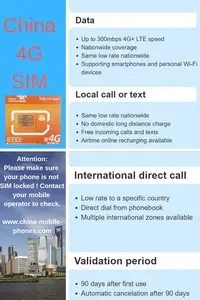
This China sim card has free incoming calls in Beijing, Shanghai and Guangzhou. Low international and China national calls.
China 4G SIM card with international 4G standard FDD-LTE network
Prepaid China 4G Sim card is a fast data connection solution in China for people on move
Hong Kong SIM card for a GSM cell phone in Hong Kong
A prepaid Hong Kong SIM Card pays the local rate for local calls and use your cellular phone in Hong Kong like you do at home



Recent Articles


-
Email Not Working in China? Fix Gmail, Outlook & VPN (2026)
May 06, 26 12:02 AM
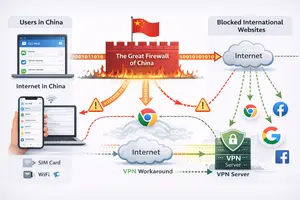 Gmail blocked in China? Discover simple ways to access email, avoid failures, and stay connected with or without a VPN in 2026.
 -
The Best Chinese Camera Smartphones 2026
Apr 10, 26 08:45 PM
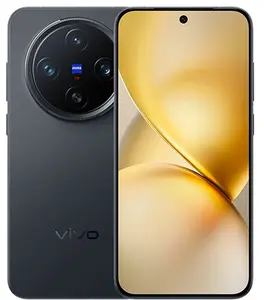 Looking for a phone with the best Chinese camera? Check out our top 12 picks for the best Chinese smartphones that deliver amazing images.
 -
中国旅行如何使用手机?2026完整指南(SIM卡、VPN、支付全解析)
Apr 05, 26 01:32 AM
 在中国轻松保持联系!探索手机使用最佳选项,从本地SIM卡到国际漫游,让您无忧上网。
To keep up to date, including special offers, please sign up our monthly service guide
Don't worry — your e-mail address is totally secure.
I promise to use it only to send you China Mobile Phones Service Monthly Guide.